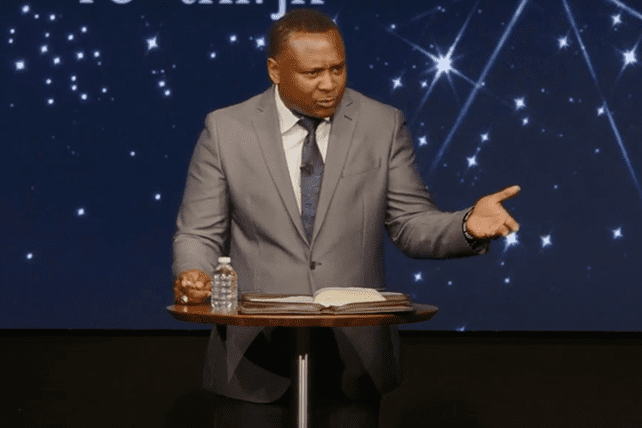
Where I’m From & How I Got Into Ministry
My life and ministry have been shaped by faith, family, education, leadership, and a deep conviction that God can use both our successes and our failures for His redemptive purposes.
I have spent more than two decades serving in Christian ministry, education, nonprofit leadership, and community development. My journey into ministry grew out of a desire not simply to preach the Gospel, but to help people understand their faith, grow as disciples of Jesus Christ, develop as leaders, and discover how biblical truth speaks to the realities of everyday life.
That calling eventually led me into pastoral ministry, Christian education, apologetics, leadership development, organizational management, and community outreach.
Over the years, I have served as a pastor, senior pastor, educator, school founder, nonprofit leader, consultant, mentor, and teacher.
My academic journey grew alongside my ministry. I pursued education not simply for credentials, but because I believed effective Christian leadership requires serious thinking, theological depth, intellectual honesty, and a willingness to continue learning.
My education ultimately included graduate and doctoral work in Christian education, theology, apologetics, and higher education.
What Drives Me —
My Mission and My “Why”
More than anything else, what drives me is my love of God, my love for my family (the stewardship which He has given me), and my love for His people. That is primary — the foundation everything else is built on.
Beyond that, I am driven by a conviction that people can grow, organizations can become healthier, leaders can become stronger, and failure does not have to be the final chapter of a person’s story.
My work has consistently centered around several areas:
I believe leadership is ultimately stewardship.
Whether leading a church, developing a school, mentoring an individual, teaching Scripture, building an organization, or consulting with a nonprofit, leadership’s responsibility is to faithfully steward the people, resources, opportunities, and influence entrusted to us.
The Biggest Turning Point in My Life
One of the most significant turning points in my life came not through success, but through personal failure.
After years of pastoral and organizational leadership, I stepped down from senior pastoral ministry in May 2024 following a serious personal and moral failure.
That season forced me to confront questions much deeper than leadership, achievement, education, or public ministry.
Who are you when the title disappears?
Who are you when your accomplishments cannot fix what is broken?
What does genuine repentance require?
What does restoration actually look like?
And can God still use a person after failure?
I want to speak honestly about what followed, because I believe honesty is part of what real restoration requires — and because I say all of this still loving the church deeply, even in the part of the story that was hardest to live.
Scripture is clear about what the church is called to be for someone who is broken: a body that restores the fallen gently, that bears one another’s burdens, that runs toward the wounded rather than away from them. That is the church I believe in. That is the church I have spent my life trying to help build.
In my own weakest moment, that is not what I experienced. Instead of the call to forgive and restore, I experienced distance. Instead of a body committed to walking someone back from the wreckage of their own failure, I experienced dismissal. My family was left to carry a weight they did not create, largely without the covering a healthy church family should provide. The people I expected to stand closest in the moment I needed it most were, more often than not, the people who stood furthest away.
I say this not to accuse or to settle a score, and not because I believe every leader or every church acted this way. I say it because it is true, and naming it honestly has been part of my own healing. I still believe in the church. I still believe the church, at its best, is exactly what Scripture says it should be — a family for the broken, not a courtroom for them. My hurt was never with that church. It was with how far the institution I experienced fell short.
And in the middle of that gap, God did not abandon me. He sent a remnant — a small number of people, some inside formal ministry and many outside it, who chose presence over judgment and truth over comfort. They did not excuse what had happened. They refused to leave. Through them, I encountered something truer than the institutional response I received: the actual body of Christ, functioning the way it was always meant to function.
That remnant, and an intentional process of repentance, counseling, accountability, reflection, and restoration, became the path forward. That process included an intensive restoration experience, extended counseling, and ongoing accountability relationships with experienced Christian leaders and pastors — people who took both my sin and my soul seriously.
The experience profoundly changed my understanding of leadership, and of the church itself.
I have learned that gifting is not the same as character, success is not the same as spiritual health, and public ministry can never substitute for private integrity. I have also learned that an institution can fail someone at their lowest point while the true Body of Christ still shows up — often through people no one would have expected, in ways no organizational chart could have planned.
I also learned something equally important:
Failure can become a chapter in your story without becoming the conclusion of your story.
Grace does not erase responsibility. Restoration does not pretend the past never happened. Redemption means allowing God to use even the most difficult chapters of our lives—including the chapters where the church did not show up the way it should have—to produce humility, wisdom, accountability, and greater dependence on Him.
That experience now informs the kind of leader, teacher, mentor, husband, father, and Christian man I desire to become — and it has deepened, not diminished, my love for the church God intended us to be.
Where I See Myself in Five Years
Over the next five years, I want to fulfill whatever call God faithfully has on my life—whatever that turns out to be. But I believe it will center on five things:
Teaching. Discipleship. Family. Writing. Building.
I want to teach Scripture with theological depth while making biblical truth understandable and applicable.
I want to give myself to discipleship—helping people, and especially men, grow as true followers of Jesus Christ, not simply as church attendees.
I want to be faithful to my family, because leadership at home is not separate from the rest of my calling — it is one of the places that calling is proven.
I want to write and develop resources addressing biblical interpretation, discipleship, apologetics, leadership, failure, restoration, and redemption.
And I want to keep building — helping churches, Christian schools, ministries, and nonprofits become healthier and more effective.
My goal is not simply to rebuild a platform.
My goal is to build a life and body of work that demonstrates God’s faithfulness and helps others become faithful stewards of their own calling.